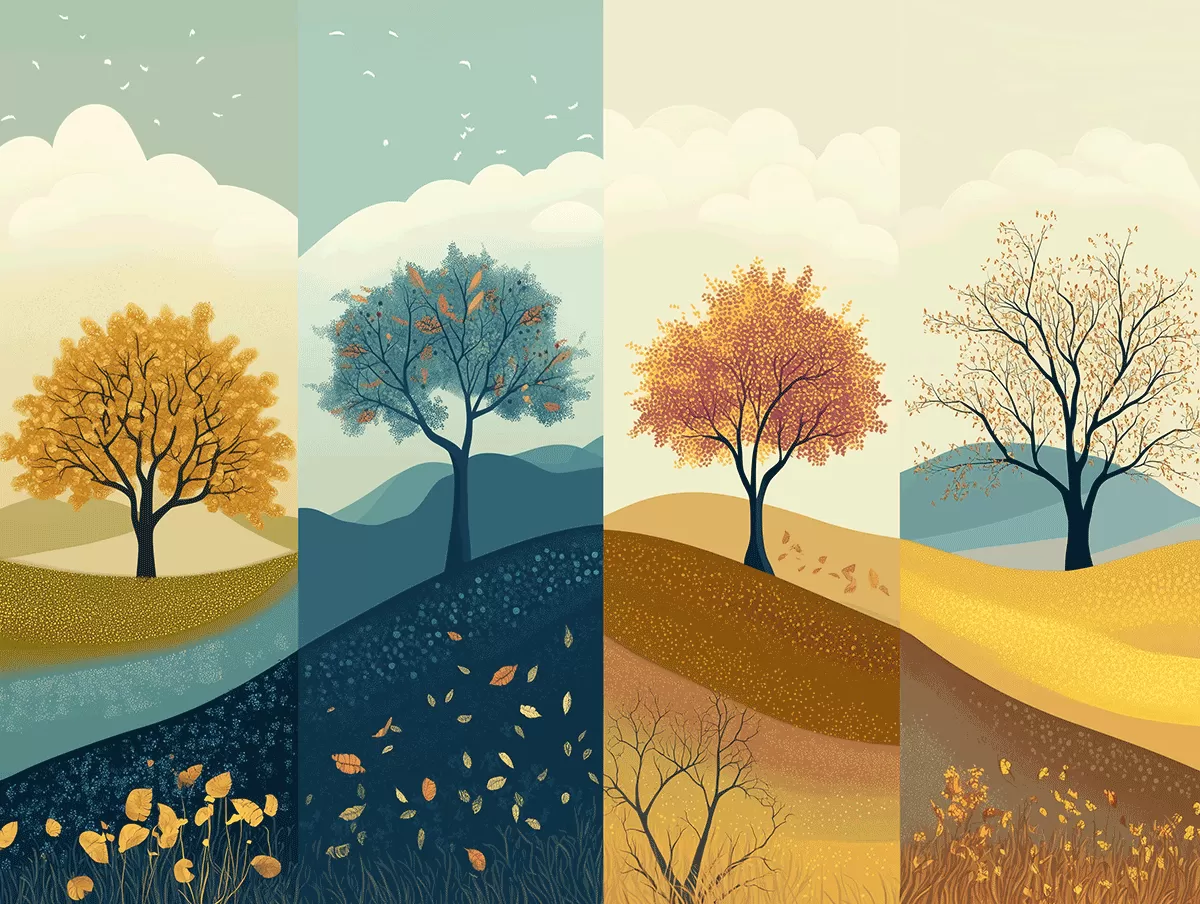
Transform the Sacred Apprenticeship Leadership Model: Four Hills Leadership That Honors Both Personal Development and Institutional Stewardship
A meditation on the Four Hills of Life and the underground wisdom that makes the impossible possible
I keep thinking about a truth that feels both ancient and urgent: we already possess everything we need to create the kind of leadership our moment demands.
Not in our endless optimization strategies or innovation frameworks, but in patterns that have sustained human communities for millennia. Patterns that understand something our hyperproductive culture has forgotten—that authentic development happens through rhythms that honor both fierce independence and profound interdependence, both contemplative depth and engaged action, both individual mastery and collective wisdom.
The Northern Arapaho people call it the “Four Hills of Life Movement”—yeneini3i’ 3o3outei’i—and it offers what I’ve come to recognize as the escape velocity we need to break free from the gravitational pull of our current impossible demands. We know the territory: too stimulated for genuine solitude, too competitive for authentic community, too urgent for the contemplative depth that makes sustainable leadership possible. We’ve diagnosed this thoroughly. The question isn’t what’s wrong—it’s how we generate enough momentum to transcend patterns that feel inescapable.
Here’s what I’ve discovered: we don’t need to invent new solutions. We need to remember older ones. We need to recall ways of being that make what seems impossible not just possible, but natural—where individual excellence serves collective flourishing, where solitude strengthens rather than threatens community, where contemplative practice deepens rather than distracts from engaged leadership.
The Four Hills framework reveals something extraordinary: these aren’t contradictions to be managed but expressions of the same underlying wisdom. When we learn to flow through natural seasons of development instead of getting stuck in any single stage, we discover we can be simultaneously deeply individual and genuinely communal, contemplatively rooted and actively engaged, personally grounded and collectively oriented.
This isn’t theoretical possibility—it’s lived reality available to anyone willing to learn from patterns that have created resilient leaders across cultures and centuries. The tracks of our current leadership models are ending, but that’s not crisis. It’s invitation. An invitation to join something far older and more sustainable than anything our optimization culture has produced.
The underground networks are already present, already responsive, already creating conditions for the kind of leadership our complex moment needs. The question isn’t whether transformation is possible—it’s whether we’re ready to recognize the connections that already exist and learn to participate more skillfully in the ancient art of being human together.
The Underground Network of Becoming
The genius of the Four Hills framework lies not in its surface structure—four stages that mirror seasons and ages—but in its recognition that authentic development happens like the mycorrhizal networks beneath forest floors. While we focus on the visible above-ground growth, the real work occurs through underground connections that link individual trees into collective resilience systems.
Each hill represents not just a life stage but a way of being in the world that remains accessible throughout our lives. More crucially, each hill creates the conditions that make the others possible. The contemplative receptivity of the First Hill nourishes the engaged competence of the Second Hill. The individual mastery of the Second Hill enables the generous leadership of the Third Hill. The institutional stewardship of the Third Hill creates space for the sacred learning of the Fourth Hill. And the wisdom of the Fourth Hill returns us to the beginner’s mind of the First Hill with deeper appreciation for mystery.
This is how the framework resolves our cultural triple bind: instead of forcing impossible choices between individual and collective development, it shows how they feed each other through underground channels we can learn to recognize and trust.
First Hill: The Underground Roots of Contemplative Leadership
The first hill—childhood, spring, the season of listening—offers something our achievement-obsessed culture has largely abandoned: the recognition that genuine leadership begins with the capacity for deep receptivity. This isn’t just about being curious or open-minded; it’s about developing what contemplatives across traditions call “beginner’s mind”—that quality of attention that can meet each moment fresh, without the armor of expertise or the burden of having to know already.
In our hyperconnected age, this quality has become revolutionary. Most of us have lost the ability to be genuinely present with uncertainty, to sit with questions without rushing toward answers, to encounter others without categorizing them within our existing frameworks. We’ve confused information consumption with wisdom cultivation, networking efficiency with authentic relationship.
But here’s what I’ve discovered through years of struggling with my own driven nature: the capacity for First Hill awareness doesn’t disappear as we age—it goes underground, like the root systems that sustain forest health through seasons of visible dormancy. When we create space for genuine solitude, not as escape from engagement but as preparation for authentic presence, we rediscover this contemplative capacity.
The tree standing alone in the desert doesn’t experience loneliness because it has learned to tap into aquifers that connect to underground rivers. When we develop the inner resources that come from contemplative practice—the ability to be present with what is rather than what we wish were different—we discover that solitude strengthens rather than weakens our capacity for connection.
Leaders who maintain access to First Hill awareness bring something essential to our complex moment: the ability to listen beneath the surface noise, to recognize patterns that aren’t yet visible to analytical thinking, to hold space for emergence rather than forcing premature solutions. They’ve learned that in times of transition, not-knowing becomes more valuable than expertise.
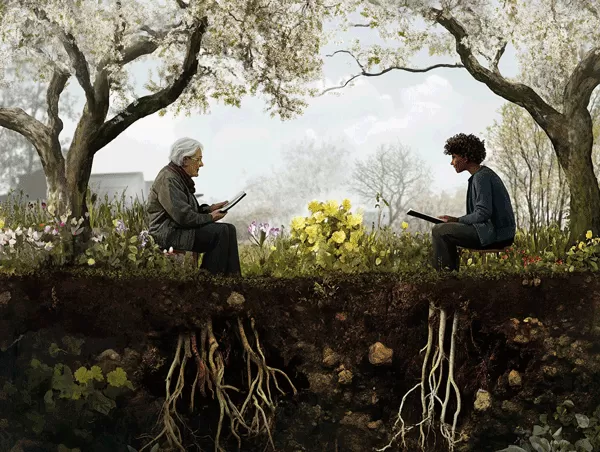
Second Hill: The Ecology of Authentic Community
The second hill—youth, summer, the season of doing—is where most of our current leaders live, and it’s both their greatest strength and their ultimate limitation. This is the hill of competence building, of proving oneself through achievement, of learning to contribute meaningful work to the collective enterprise.
Our generation became skilled at Second Hill capacities. We learned to optimize systems, deliver results, build personal brands, accumulate credentials. We mastered what economists call “human capital development”—the individual skills that make us valuable in competitive markets.
But somewhere along the way, we began to mistake Second Hill competence for the destination itself. We created what I think of as “perpetual summer” culture—constant productivity, endless optimization, the belief that more doing will solve problems that require different kinds of wisdom.
This is where the underground network metaphor becomes crucial. In healthy forest ecosystems, individual trees don’t just compete for resources—they participate in collaborative relationships through mycorrhizal connections that share nutrients, information, and mutual support. The trees that thrive understand something we’ve forgotten: individual excellence serves collective flourishing, not the other way around.
Authentic community emerges when we recognize that our individual gifts develop most when they’re offered in service of something larger than personal advancement. This doesn’t mean sacrificing personal growth for group conformity—it means understanding that genuine community creates conditions where individual talents can flourish in ways that isolation makes impossible.
The leaders trapped in Second Hill thinking approach relationships like business transactions: what can I get? how does this serve my goals? how can I optimize this interaction? But leaders who understand the underground network reality approach relationships like gardeners: how can I contribute to conditions where everyone’s gifts can flourish? what does this situation need that I’m positioned to offer? how can I help create the soil where authentic connection becomes possible?
This shift from transactional to ecological thinking transforms everything. Instead of exhausting ourselves trying to manage a portfolio of strategic relationships, we learn to participate in living networks that sustain themselves through the circulation of gifts rather than the accumulation of advantages.

Third Hill: The Sacred Responsibility of Cultural Stewardship
The third hill—adulthood, autumn, the season of giving back—is where the framework addresses our deepest institutional crisis. This is where individual competence matures into collective stewardship, where personal success becomes meaningful only insofar as it creates conditions for others to flourish.
Most of our current leaders never made this transition. Instead of learning to give back, they learned to take more. Instead of becoming teachers, they remained competitive students. Instead of building systems that would outlast them, they optimized systems that served them. They got stuck in what I call the “accumulation trap”—the belief that gathering enough individual resources will solve problems that require collective wisdom.
But Third Hill leadership operates on different principles. It recognizes that authentic authority comes not from accumulating power but from circulating it, not from being indispensable but from making others capable, not from having all the answers but from creating conditions where collective intelligence can emerge.
This is where the seasonal wisdom becomes essential. Just as forests require different rhythms throughout the year—intensive growth periods balanced with storage and renewal times—authentic leadership requires understanding when to engage and when to step back for reflection and restoration. The mycelium beneath forest floors demonstrates this: periods of apparent dormancy that are times of deep network maintenance, followed by seasons of intensive nutrient exchange and collaborative growth.
Our productivity-obsessed culture has lost touch with these natural rhythms. We’ve created what philosopher Byung-Chul Han calls “burnout society”—systems that demand constant output without providing time for the contemplative rest that makes sustained creativity possible. Leaders operating from Third Hill awareness understand that creating space for what appears to be “non-productive” time is essential for long-term collective flourishing.
This means designing institutions that honor different seasons of engagement: times for intensive collaboration, times for individual reflection, times for what Han calls “the art of lingering” without immediate purpose. It means understanding that the most resilient communities create rhythms that serve both immediate responsiveness and long-term sustainability.
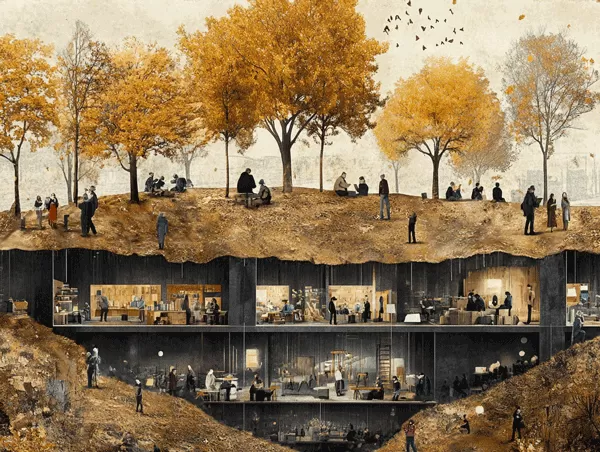
Fourth Hill: Winter as Sacred Learning
The fourth hill—old age, winter, the season of sacred learning—offers something our youth-obsessed, innovation-focused culture has almost lost: the recognition that certain forms of wisdom only emerge through having traversed all the previous hills with attention and care.
This isn’t about chronological age but about what contemplatives call “ripening”—the integration of lived experience into distilled understanding that can nourish future generations. It’s what happens when individual development serves collective memory, when personal wisdom becomes cultural treasure, when the underground connections built through a lifetime of authentic relationship become visible as the mycelial networks that sustain entire ecosystems.
In our culture, we’ve confused Fourth Hill wisdom with irrelevance. We’ve created retirement systems that remove people from productive engagement when their integrated understanding might be most valuable. We’ve segregated generations rather than creating spaces where different life stages can cross-pollinate and enrich each other’s perspectives.
But Fourth Hill awareness offers something essential for our current moment: the ability to see present challenges within longer patterns, to recognize the cyclical nature of growth and renewal, to hold hope without denying difficulty because you’ve witnessed how apparent endings often become unexpected beginnings.
This is the hill that understands what Katherine May calls “wintering”—those necessary seasons of turning inward, slowing down, allowing life’s deeper currents to surface. Not as escape from engagement but as preparation for the kind of authentic presence that our complex moment needs.
Leaders who access Fourth Hill awareness bring what might be called “institutional memory” to changing situations. They’ve learned to distinguish between what changes and what endures, between innovation that serves life and novelty that serves restlessness. They offer something invaluable: the long view that makes sustainable decisions possible.
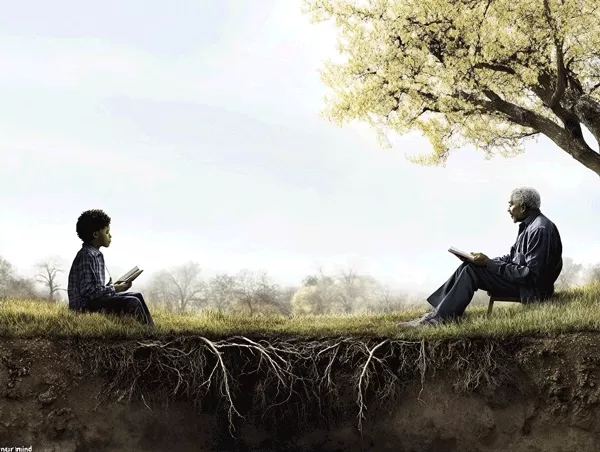
The Flow Principle: Why Getting Stuck Destroys Everything
Here’s what our current leadership crisis reveals: we’ve treated the Four Hills as destinations rather than movements, as achievement levels rather than flowing states of being. We’ve created leaders who want to “be” on Hill Three—to enjoy the power and influence of mature leadership—without having flowed through the progression that creates the wisdom to wield that power well.
The result is what I call “developmental bypass”—leaders who have the external trappings of authority but lack the internal formation that makes authority beneficial rather than destructive. They’ve accumulated credentials without cultivating character, optimized systems without understanding ecology, managed complexity without developing wisdom.
Time brings us to each hill whether we’re ready or not. The executive in his sixties who insists on doing the detailed work of the Second Hill isn’t demonstrating competence—he’s avoiding the growth that his life stage requires. The organization structured around individual achievement rather than collective stewardship isn’t optimizing for success—it’s optimizing for the kind of brittleness that becomes catastrophic when conditions change.
The hills come whether we embrace them or resist them. The question is whether we’ll flow with them or fight them, whether we’ll learn what each season has to teach or remain stuck in patterns that once served us but have now become limitations.
Building Tracks, Not Just Running Trains
So what does this mean for those of us who find ourselves responsible for building new tracks when our training was all about running existing trains?
First, we need honest recognition of where we are. Many of us are Second Hill people trying to do Fourth Hill work. We’re operators being asked to be visionaries, efficiency experts being asked to be wisdom keepers, individual contributors being asked to be collective stewards. This doesn’t make us failures—it makes us humans at a particular stage of development facing challenges that require different stages of awareness.
Second, we need to understand that building tracks requires access to all four hills at once. Innovation requires First Hill curiosity, Second Hill competence, Third Hill stewardship, and Fourth Hill wisdom. No individual can embody all of these simultaneously, but organizations can create what I call “developmental ecosystems”—teams that span the hills, bringing different life-stage perspectives to bear on complex challenges.
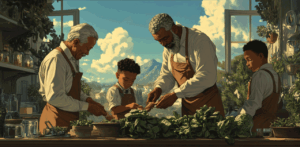
Third, we need to embrace what I call “apprentice-leader identity”—ways of being that honor both teaching and learning, that see leadership not as arrival but as continuous becoming, that understand mastery includes the humility to remain students.
The Underground Revolution
This brings us to the deeper implication of the Four Hills framework: it reveals how the most important transformations happen underground, through patient relationship-building that creates conditions for authentic flourishing rather than through visible organizing that optimizes for immediate results.
The mycelium beneath our feet has been practicing this for 400 million years—periods of apparent dormancy alternating with intensive growth, underground network maintenance supporting above-ground flourishing. Individual trees may get visible credit for forest health, but scientists now understand that mycorrhizal networks make forest resilience possible.
Perhaps authentic leadership development works in a similar way: not through visible credentialing but through underground wisdom cultivation that creates conditions for collective thriving. Not through individual advancement but through participation in living networks that sustain themselves through the circulation of gifts rather than the accumulation of power.
This suggests that our most important work happens in spaces our productivity culture overlooks—the quiet conversations that build trust, the contemplative practices that develop inner resources, the seasonal rhythms that honor both engagement and reflection, the apprentice relationships that circulate wisdom across generations.
The Promise at the End of the Tracks
The tracks are ending, but that’s not a crisis—it’s an invitation. An invitation to remember what indigenous peoples have known: that leadership isn’t about individual achievement but about collective wisdom, not about accumulating power but about circulating it, not about reaching destinations but about honoring the sacred movement of life itself.
The Four Hills teach us that wisdom emerges not from having answers but from living increasingly refined questions. In a world that rewards quick solutions, this might be the most radical leadership practice of all: the willingness to let mystery teach us what certainty cannot.
When we learn to flow through the hills rather than getting stuck in any single stage, we discover something extraordinary: we can be simultaneously deeply individual and genuinely communal, contemplatively rooted and actively engaged, personally grounded and collectively oriented. These aren’t contradictions to be resolved but paradoxes to be lived, not problems to be solved but dances to be learned.
The mycelium is teaching. The underground networks are present, responsive, creating conditions for life to flourish. The question isn’t whether sustainable leadership is possible—it’s whether we’re ready to recognize the connections that exist and learn to participate more in the ancient patterns that have sustained human communities across millennia.
The Four Hills offer us a pathway home to ways of being that make the impossible possible: finding strength in solitude that enhances rather than threatens community; building authentic relationships that honor rather than diminish individual development; cultivating contemplative wisdom that deepens rather than distracts from engaged leadership.
Maybe it’s time to stop building tracks above ground and start growing them from below. Maybe authentic leadership isn’t something we create but something we join—the underground network that’s been connecting wisdom across generations long before we arrived and will continue long after we’re gone.
The hills are calling. The question is whether we’re ready to answer—not as individuals seeking personal advancement, but as apprentices in the ancient art of being human together.
For Those Ready to Go Deeper
Essential Reading
- The Four Hills of Life: Northern Arapaho Knowledge and Life Movement by Jeffrey D. Anderson
- The Dispossessed by Ursula K. Le Guin
- Mutual Aid: A Factor of Evolution by Peter Kropotkin
- Reunion: Leadership and the Longing to Belong by Jerry Colonna
- Small is Beautiful by E.F. Schumacher
- Entangled Life by Merlin Sheldrake
Other Media We Admire
- Reboot Podcast with Jerry Colonna
- On Being with Krista Tippett
- The Power of Vulnerability by Brené Brown (TED Talk)
Questions Worth Living
What hill am I currently living from, and what hill is my life situation asking me to grow into?
How might our organizations change if we designed them to honor and integrate all four hills rather than optimizing for Second Hill productivity alone?
Where in my life am I trying to stay in a particular hill rather than flowing with the natural progression that circumstances are offering?
What would leadership look like if we understood it as apprenticeship—continuous learning in service of collective wisdom—rather than individual achievement?
How might we create institutions that circulate rather than accumulate wisdom, that serve collective flourishing rather than individual advancement?
What track-building challenges is our community facing that require wisdom from all four hills to address?
These aren’t questions to answer but to live with, to let work on us as we work on them. They’re designed to create space for the kind of reflection that hill transitions require—the underground work of becoming rather than the surface work of doing.
The Four Hills teach us that authentic transformation happens not through having insights but through becoming the kind of people who can live those insights with increasing depth and grace. In our results-obsessed moment, this patient cultivation of being might be the most radical practice of all.