
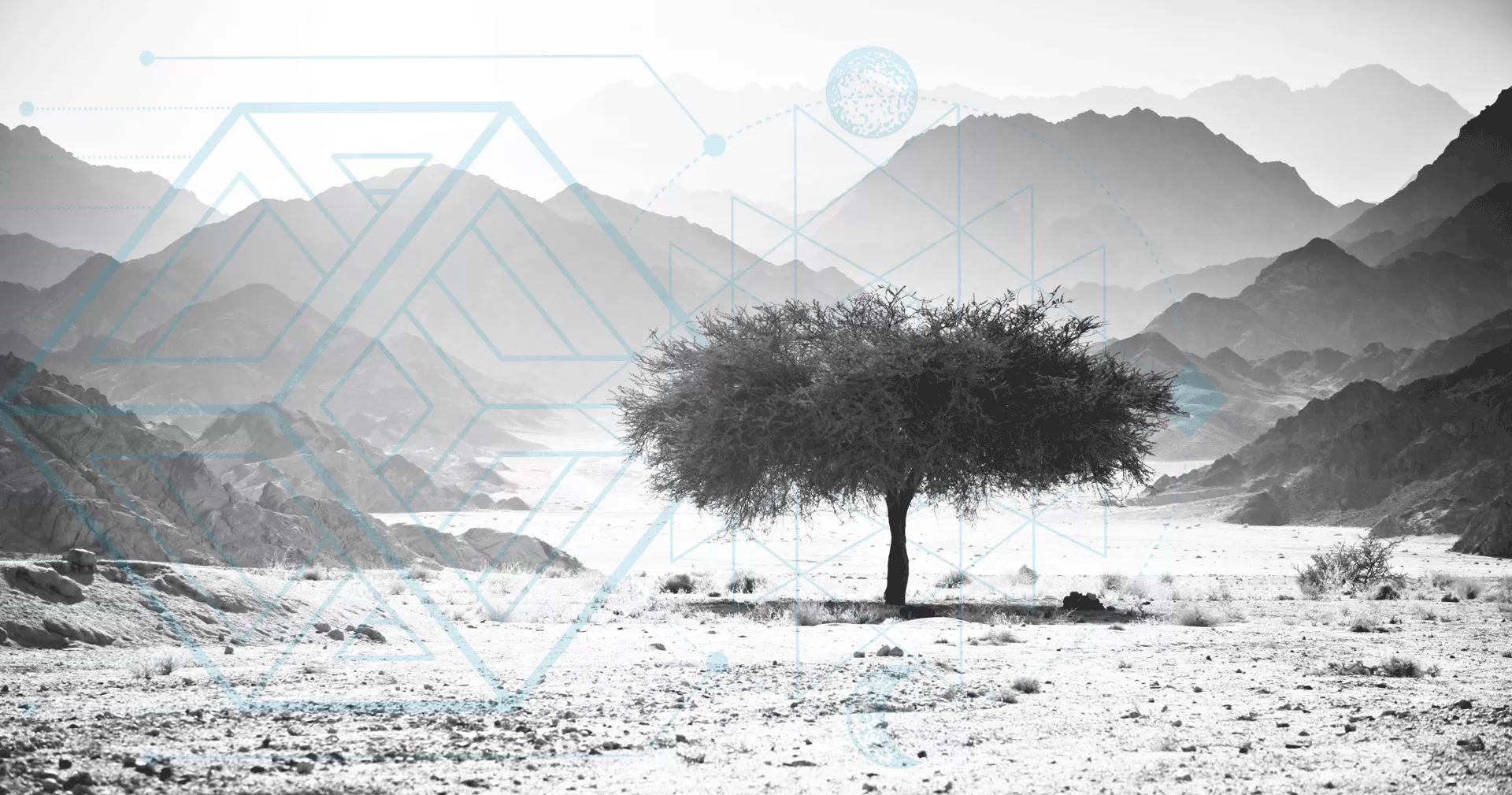
The Lone Tree: Finding Strength in Solitude
There’s a tree I think about sometimes. It stands alone in the desert—no forest to hide in, no crowd to disappear into. When storms come, it has nowhere to run. When drought comes, it either finds water in impossible places or dies trying.
Most of us would call this a tragedy. The tree knows better.
The Story We Tell Ourselves About Being Alone
I spent years believing the desert was punishment. You know that old story about wanderers in the wilderness? Forty years of exile for disobedience, searching for a promised land that stayed perpetually out of reach? That was my framework for solitude: banishment, failure, something to escape as quickly as possible.
But here’s what I’ve learned the hard way: we fear solitude because we’ve confused it with loneliness. And that confusion is keeping us from the very thing we need most.
Think about it—when did being alone become synonymous with being rejected?
Solitude vs. Loneliness: The Difference That Changes Everything
Loneliness is standing in the desert scanning the horizon for rescue. It’s that restless conviction that salvation must be coming from somewhere else, someone else, something else. It’s the endless wandering that never leads anywhere because you’re running from the one person you can never escape: yourself.
Solitude? That’s different. Solitude is finally stopping the frantic search and asking a different question: “What if I’ve been standing on sacred ground all along?”
The lone tree doesn’t experience loneliness because it discovered something most of us miss: the deepest connections happen underground. While we’re busy networking on the surface, it’s tapping into aquifers that connect to root systems hundreds of miles away.
I can simultaneously cherish my relationships and know that my capacity for genuine connection grows directly from my willingness to be truly alone. The paradox isn’t a problem—it’s the point.
When you stop confusing solitude with punishment, everything shifts. You quit fighting your alone time and start mining it for gold.


How to Be Alone Well: What the Desert Teaches
The tree doesn’t survive by luck. It has learned things most of us haven’t: how to conserve energy, how to go deep, how to find nourishment in places that look barren.
Establish Rhythms That Honor Depth
- Morning solitude before the world makes its demands
- Evening stillness to let the day settle into wisdom
- Weekly digital sabbaths from the constant input
- Seasonal retreats when life feels too cluttered to think clearly
Build Boundaries That Protect Growth The tree’s bark isn’t weakness—it’s intelligent protection. In our hyperconnected age, this means saying no to:
- Digital consumption that keeps you perpetually reactive
- Social obligations that drain without replenishing
- Mental loops that mistake anxiety for productivity
- The addiction to external validation that keeps you spiritually dependent
Cultivate Internal Resources The tree doesn’t need entertainment. It finds richness in the play of light across sand, in the conversations between wind and branch, in the slow satisfaction of growth that happens in its own time.
You can develop similar internal wealth: books that feed your soul rather than fill time, creative projects that express truth rather than impress others, reflection that clarifies rather than spirals.
The practice is deceptively simple: go deeper, not wider.
But simple doesn’t mean easy. Which brings us to the real work.
Self-Discovery Through Solitude: Meeting Who You Actually Are
Here’s what every desert wanderer eventually discovers: what you’re trying so hard to escape is yourself. All that restless movement, all that horizon-scanning for a better situation, a different life, the right person to complete you—it’s an elaborate avoidance strategy.
The moment you stop running toward some imaginary promised land, something profound happens. You realize that the self you’ve been fleeing contains depths you never knew existed.
The Archaeology of Self Solitude reveals the layers of who you are, like the tree’s roots exploring different geological strata:
- The social self that performs for others
- The emotional self that carries both grief and unexpected joy
- The creative self that dreams beyond current limitations
- The wise self that knows things your thinking mind hasn’t figured out yet
- The connected self that recognizes your place in the larger web
Learning to Listen Beneath the Noise In true solitude—when you’ve finally turned off all the external voices—you discover there’s another voice that’s been trying to get your attention. Not the mental chatter that fills every quiet moment with worry and planning, but something deeper.
This voice doesn’t shout. It whispers in images, speaks through bodily sensations, communicates in half-formed knowings that require patience to decode. Learning to hear it is like learning a new language—the language of your own depths.
I can simultaneously know myself well and remain perpetually surprised by what emerges when I’m truly still.
The real treasure isn’t “finding yourself”—as if you were lost luggage. It’s befriending yourself. Making peace with your complexity. Discovering that the person you’ll spend your entire life with is actually worth knowing.
Spiritual Growth Through Solitude: Storm as Teacher
The lone tree can’t hide in a forest when storms come. There’s no blending into the crowd, no hoping the lightning hits someone else. Every wind, every sandstorm, every season of drought gets faced head-on.
And here’s what looks impossible from the outside: it’s precisely these challenges that make the tree unbreakable.
The Hidden Gift of Difficulty What appears to be punishment is actually preparation. Those winds that threaten to uproot also:
- Force roots to grow deeper, seeking stable ground
- Strengthen the trunk through natural resistance training
- Prune away weak branches that would snap under future pressure
- Shape the tree to work with natural forces rather than fight them
Your spiritual growth follows the same pattern. The difficulties you face in solitude—the anxiety that surfaces when you stop running, the grief you’ve been avoiding, the existential questions that have no easy answers—these aren’t obstacles to growth. They’re the curriculum.
Sacred Struggle Every wisdom tradition knows this: certain kinds of transformation require separation from the familiar. Desert fathers, Buddhist monks, Indigenous vision quests—they all understand that some growth only happens alone.
This isn’t escapism. It’s preparation for deeper engagement. The tree’s season of solitary strengthening prepares it to provide shade for travelers. Your spiritual growth in solitude prepares you to offer real shelter to others—not the kind that comes from having all the answers, but the kind that comes from having learned to be present with the questions.
Dancing with the Dark Night Sometimes the storms feel overwhelming. What mystics call “the dark night of the soul” isn’t poetic—it’s disorienting, frightening, profoundly uncomfortable. But like the tree bending in hurricane winds, you discover you’re more flexible than you thought.
These dark periods often precede breakthrough. They’re not evidence you’re failing but signs you’re growing beyond your current capacity to contain what you’re becoming.
The tree doesn’t resist the storm—it learns to dance with it. There’s a difference.
Inner Peace Through Solitude: Tapping the Underground
Here’s where the metaphor gets profound: the tree’s survival has nothing to do with surface conditions. While the desert burns above, deep underground flows the water that sustains life.
The tree has learned to find the aquifers.
Peace That Doesn’t Depend on Circumstances Real inner peace isn’t the absence of difficulty—it’s access to depths that remain calm regardless of what’s happening on the surface. Through sustained solitude, you develop:
- A stability that doesn’t fluctuate with external circumstances
- Perspective that sees temporary challenges within eternal contexts
- Internal resources that refresh from within rather than requiring constant external validation
- The ability to be fully present to what is, rather than always wanting to be somewhere else
The Practice of Going Deeper Like the tree’s commitment to sending roots down rather than branches out, finding peace requires choosing depth over width:
- Meditation that trains attention to rest in awareness itself
- Reading that nourishes the soul rather than just feeding the mind
- Time in nature that reconnects you to rhythms larger than your immediate concerns
- Prayer or reflection that opens you to mystery beyond your understanding
- Creative expression that channels inner experience into something beautiful
The Underground Network Here’s the final paradox that changes everything: when the tree goes deep enough, it discovers it was never alone. Those aquifers connect to underground rivers that nourish other trees sometimes hundreds of miles away. The deeper it goes, the more connected it becomes.
This is what real solitude teaches: beneath the surface differences that seem to separate us, we’re all drawing from the same underground streams. When you’ve done the work of knowing yourself deeply, you recognize that same depth in others.
The loneliest tree becomes the most connected being in the landscape.
Learning from the Teacher
The lone tree offers us something our restless, hyper-connected culture has forgotten: solitude is not exile but education, not punishment but preparation, not isolation but the deepest form of integration.
When you learn to stand alone without drowning in loneliness, you discover resources you didn’t know you had. When you face life’s storms without hiding in crowds, you develop strength that can weather anything. When you choose depth over surface connection, you find sustenance that comes from within.
The desert that seemed like punishment becomes sanctuary. The wandering that felt like curse transforms into pilgrimage. What looked like the loneliest existence reveals itself as the most profoundly connected way to live.
Maybe it’s time to stop scanning the horizon for salvation. Maybe it’s time to put down roots where you are. Maybe you’ve been standing on holy ground all along, and solitude is how you learn to see it.
The tree stands ready to teach. The question isn’t whether the lesson is available—it’s whether you’re ready to receive it.
For Those Ready to Go Deeper:
Essential Reading:
- Solitude: A Return to the Self by Anthony Storr
- Journal of a Solitude by May Sarton
- Desert Solitaire by Edward Abbey
- The Stranger in the Woods by Michael Finkel
Other Media We Admire:
- On Being: Stephen Batchelor “Finding Ease in Aloneness”
- The Power of Solitude: How Being Alone Can Help Us Find Happiness (TED)
Questions Worth Living:
- What am I running toward that might be found by standing still?
- How might my current struggles be invitations to root deeper rather than move elsewhere?
- What underground streams am I already connected to without realizing it?
Disclosure Statement
This post was produced according to the approach outline in The Art of Transparent AI Collaboration Workflow (click to review).